
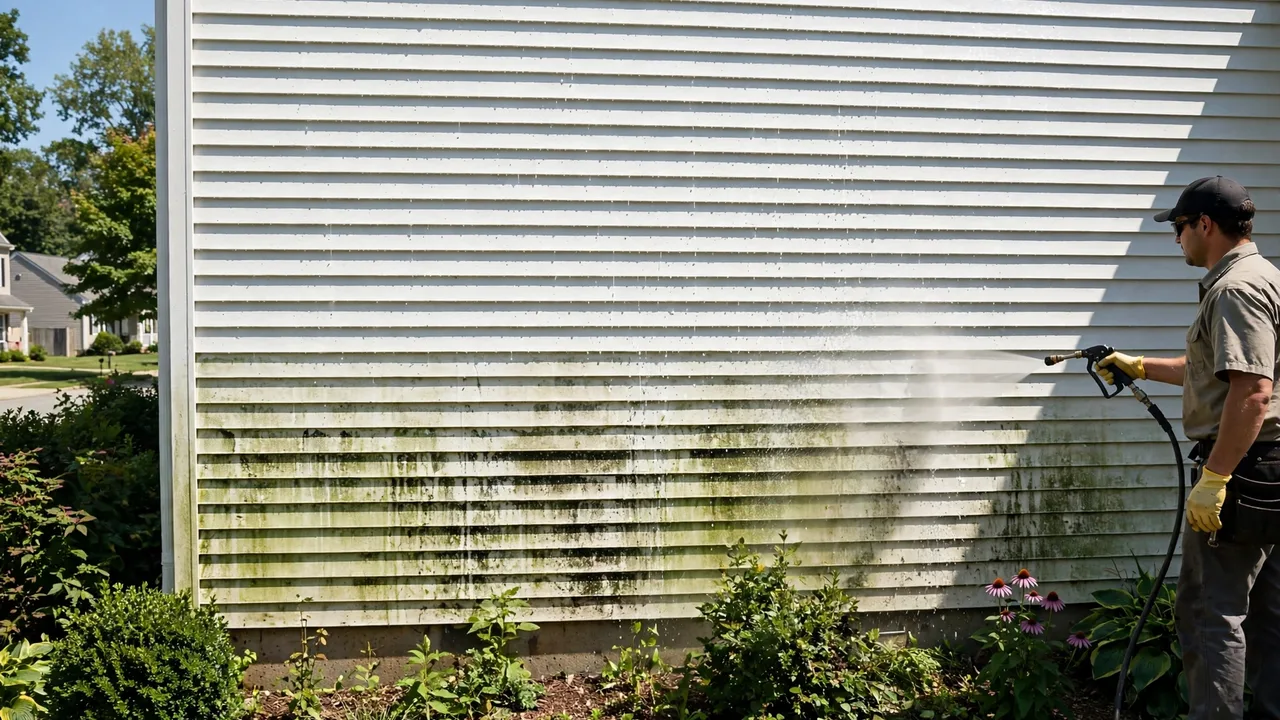
Homeowners use "pressure washing" for every kind of exterior cleaning, but professionals split the work into two very different methods — and choosing the wrong one is how siding gets etched and shingles lose their granules. Here is the honest breakdown we give every customer who calls Eagle Pressure Washing.
What pressure washing is
True pressure washing uses high-pressure water — often 2,500 PSI and up — to physically blast contamination off a surface. It is the right tool for hard, durable materials: concrete driveways and sidewalks, pavers, stone, and sturdy masonry. On those surfaces, pressure (especially through a surface cleaner) is fast, even and safe.
What soft washing is
Soft washing uses garden-hose-level pressure and lets professional detergents do the work. The solution kills algae, mildew and bacteria at the root, then everything rinses away gently. It is the correct method for vinyl and fiber-cement siding, painted wood, stucco — and it is the only safe method for asphalt shingle roofs.
Why the distinction matters in the DMV
Maryland humidity means most of what makes a home look dirty is alive: algae on siding, bacteria streaking roofs, mildew on fences. Blasting living growth off a delicate surface both damages the surface and leaves the roots behind, so the green comes back in months. Soft washing kills the roots, which is why results last years instead of a single season.
The rule of thumb our crews use
If the surface could be damaged by a concentrated jet at close range — siding, roofing, wood decking, screens, painted anything — it gets a soft wash. If it is mineral and hard — concrete, brick pavers, stone — it can take real pressure. A good contractor carries both setups on the truck and chooses per surface, not per habit.
Not sure what your home needs? Call (855) 417-6030 and describe the surface — we will tell you the right method before we ever quote the job.