
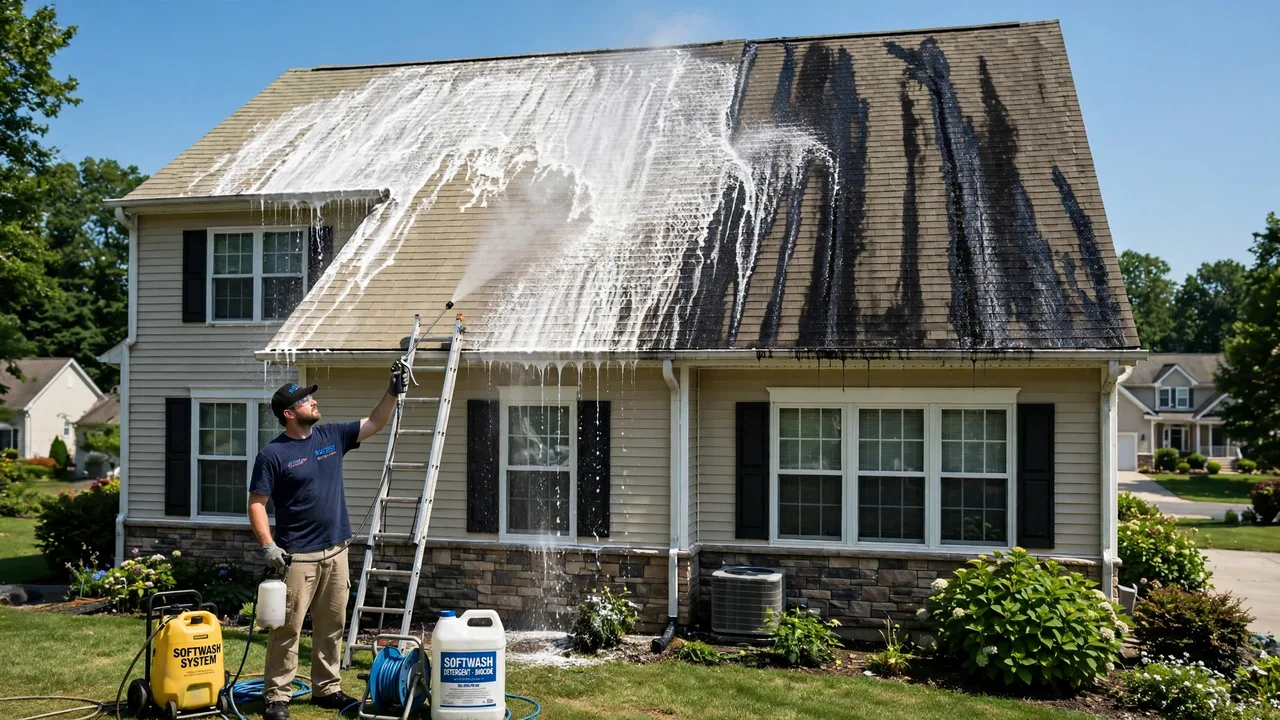
Drive through any Maryland neighborhood and you will see them: dark streaks running down roofs that are often less than ten years old. Most homeowners assume the shingles are failing or the roof is just dirty. The truth is stranger — those streaks are alive.
Meet Gloeocapsa magma
The streaks are a cyanobacteria that feeds on the limestone filler in asphalt shingles. It arrives on the wind, establishes on the shaded, moisture-holding slopes first — usually the north face — and spreads. Algae and then moss follow in the foothold it creates, and the whole colony holds moisture against the roof while it feeds.
Why pressure is the worst response
It is tempting to blast the streaks off. Do not. High pressure strips the protective granules from shingles, voids manufacturer warranties, and leaves the bacteria's roots alive in the shingle mat — the streaks return within a season, on a roof that is now measurably thinner.
What works: a true soft wash
Roof soft washing applies a treatment at near-garden-hose pressure that kills the bacteria, algae and moss at the root. The black staining fades as the treatment works and rinses; dead moss dries and releases naturally over the following weeks of rain. Because the colony is killed rather than scattered, roofs typically stay clean for two to four years.
When to treat
At the first visible streaking. Early colonies treat quickly and gently; roofs left for years need stronger dwell times, and thick moss takes weeks to release. If you can see streaks from the street, the colony is established enough to be worth removing.
Seeing streaks on your roof? Call (855) 417-6030 — a soft wash assessment is free, and we will tell you plainly if your roof does not need one yet.